November 25th, 2026 Len’s Political Note #856 Three House Committee Contests: Education and Workforce, Financial Services, and Small Business.
Congressional Leadership
If House Democrats keep their schedule, their full caucus will vote to select Committee Chairs for its many committees on December 9. By then, they will have received a recommendation from the Steering and Policy Committee. Here are three committees with contests. As with the Senate Majority Leader contest, I urge you to take a look at these candidates and weigh in. Contact your Member of Congress and urge him or her to vote for the candidates who is your preference. When co-chairs for the Policy and Steering committee have been selected, call them as well. The Steering committee will make recommendations to the full Democratic caucus regarding chairmanships. Take this opportunity to expand democracy a little bit.
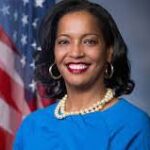
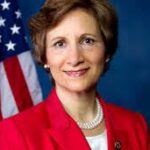
Johana Hayes Suzanne Bonamici
House Committee on Education and the Workforce
The committee is responsible for education from early childhood through post-secondary schools and colleges as well as a various workforce training and technical education programs. It is also responsible for education research. In its workforce roles, the committee is responsible for oversight of salary and benefit issues, employment issues ranging from collective bargaining to worker safety, The current Ranking Member, Bobby Scott of Virginia, is retiring. The contest is between Suzanne Bonamici of Oregon, formerly the Ranking Member, and Jahana Hayes of Connecticut.
After her high school graduation in the 1970s, Suzanne Bonamici and a group of her friends traveled west from Michigan. When she got to Portland, Oregon, Suzanne Bonamici decided to stay and make it her home. A few years later, her mother remarried and traveled in the opposite direction to West Stockbridge, Massachusetts where she and her husband renamed the Sunflower Shop and expanded it into an arts and crafts gallery.
Suzanne Bonamici got work in Portland and went to school. She got an Associate’s Degree and moved on to the University of Oregon. She worked for Legal Aid while in college and law school, getting her JD in 1983. She got a job in Washington, DC doing consumer protection work for the Federal Trade Commission. In DC, she met and married her husband, Harvard Law School Graduate Michael Simon, son of the writer, Neil Simon. They stayed in Washington until 2001. He had joined the firm Perkins Cole, became head of their Portland office and Suzanne Bonamici became a legislative assistant in the Oregon House of Representatives. In 2006, she was elected to an open seat in the House. In 2008, she was appointed to a vacated state senate seat fo which subsequently she was unopposed for election. And in 2012, she was elected to Congress in a special election. She has remained. In Congress. Suzanne Bonamici’s principal issues have included a focus on expanding educational opportunity for the needy, opposition to predatory lenders, and passage of the Every Child Succeeds Act which sought less reliance on high stakes testing and encouraged more students to take STEAM courses.
Fifty-three years old, Jahana Hayes is 19 years younger than her colleague from Oregon. She was born and raised in Waterbury, Connecticut with the odds against her. She grew up in a public housing project and recalls going to bed listening to gunshots and waking up to see a dead body in the hallway. School was her refuge. She stood out, even in the honors classes to which she was assigned. She was on track for a prestigious private New England school, but it did not work out. At 17, she was pregnant. She kept the baby. When she returned to school, she was reassigned to classes for girls who were pregnant or had children. She considered dropping out. Encouraged by teachers to stay, she graduated in 1990, went part time to a local community college for an Associate Degree, and then continued plugging at Southern Connecticut State where she got her BA and her teaching certificate.
Jahana Hayes got a job at a school serving adults with mental disabilities, some of whom could work toward a high school diploma. She prepared to leave when the shorthanded school went to double shifts. She was, after all, caring for her child. The union helped her. They found her a job teaching at Waterbury’s John F. Kennedy High School. She continued teaching and was loved there. She continued studying, too, as she got a Master’s Degree from St. Joseph and a further certificate from the University of Bridgeport.
She might have stayed teaching forever, except that her years ago student teaching supervisor Burton Saxton, a former Connecticut teacher of the Year himself, nominated her for that same honor. In 2016, she won that honor and then another. Jahana Hayes was named National Teacher of the Year.
Westbury is in Connecticut’s 5th Congressional District that runs along the state’s western border, excepting the southernmost New York City suburbs. It has been something of a swing district, The incumbent, a Democrat, in the midst of a scandal, announced she would not run in 2018. While she was still in the flush of publicity as National Teacher of the Year, Burton Saxton urged Jahana Hayes to consider a run. More important, perhaps having been contacted by Saxton, US Senator Chris Murphy, who once represented that district, urged her to run. So did the Governor, Ned Lamont – though not publicly.
Connecticut has a nominating convention first and then a primary for those who persist. Jahana Hayes narrowly lost in the convention and persisted. She won the primary by a 62-39 margin and the general election 56-44. She had explained, when she was named Teacher of the Year, that what she taught was kindness. She did not emphasize it, but she also taught competence. Her closest race was in 2022 when she defeated a Black State Senator, a man – by 2,004 votes. Read more? See Len’s Political Note #542.
In Congress, in a letter to all Members, Jahana Hayes urged that Representative Marjorie Taylor Greene not be placed on the Education and Labor Committee. She reminded the Members that Sandy Hood was in her district and that Greene had claimed that the massacre of children there was a “false flag operation.” Jahana Hayes also serves on the Agriculture Committee and sees herself as a key voice in a committee that has a disproportionate number of Members who speak for large corporate farms. As an example of what the federal government can do to address the climate crisis, she introduced a bill to fund the replacement of diesel school buses with zero emission buses. She has proposed numerous bills on education – mainly with the goal of reversing what she calls decades of disinvestment in public education.
If you find you can make a choice between these two remarkable women, don’t keep it to yourself. Tell your Member of Congress. Urge him or her to support your choice. You could also contact the anticipated Speaker – Hakeem Jeffries. While he will be the chair of the Steering and Policy committee that recommends committee chairs to the membership, he has not yet named the co-chairs (there will probably be three) who will do the heavy lifting on his behalf.


Sean Casten. Maxine Waters
House Committee on Financial Services
This committee’s jurisdiction includes banks and banking, insurance and any related required support, international finance and associated organization, securities and exchanges, money and credit, and various aspects of federal monetary policy including, surprisingly, public and private housing and urban development. Sean Casten of Illinois is challenging former Ranking Member Maxine Waters of California.
Maxine Waters grew up in St. Louis. Her father left the family when she was 2 years old. She moved to Los Angeles after high school. I don’t know when she began seeing the world as a site for combat, but, at 88 years old, she still does.
She owes a lot to Head Start – not because she was in a preschool program as a child, but because, after a factory job and a telephone operator job, she got a teacher aide job at Head Start in 1966 – a job that required her to think and talk, a job that lured her to go to college. She got her BA from what is now California State—Los Angeles in 1971.
In 1973, Maxine Waters went to work for City Councilman David Cunningham Jr, who had turned his experience working for DuKane plastics in the US and in Nigeria into a consulting firm working with communities and businesses around the country and into a career with political potential. He was appointed city councilor to replace Tom Bradley who had been elected Mayor.
Three years later, Maxine Waters was herself elected to the state assembly and worked on getting the state pension funds to divest from investments in South Africa. It did not take her long to become chair of the Democratic caucus – completing what was the largest divestiture from South Africa to date, passing limitations on police use of strip searches, and setting requirements regarding industrial plant closures.
In 1990, her congressman announced his retirement. Maxine Waters announced her candidacy, won the primary and was elected easily in her overwhelmingly Democratic South Los Angeles district. Her combative approach earned national attention in 1994 when she interrupted Long Island Republican and novelist Peter King several times. For this retaliation against King’s harsh interrogation of First Lady Hillary Clinton’s Chief of Staff; for her rules-violating interruptions Maxine Waters was suspended for the day.
We could track her confrontation after confrontation. Here’s one. In 2006 she attacked the FEC’s waiver of the rule for KTLA that prohibited television station broadcast licenses to owners of major newspapers in the same city. The Los Angeles Times and KTLA had the same owners and both were critical of the hospital named the King/Drew Medical Center.
You could just look 20 years later and consider Msxine Waters’ activities of the past week or two. After the Senate passed what she called the “so called” Bipartisan American Affordability and Jobs Act (BAAJA), she announced, as Ranking Member of the Financial Services Committee, she could not support it. “If we cannot trust the Trump administration to fund clean energy projects as required by law, we must not make it easier for Trump to fast-track fossil fuel and data center projects for wealthy special interests and favored campaign donors.”
Maxine Waters also attacked the administration plan to exclude families with an undocumented member from federally funded public housing. She said “HUD has finalized an inhumane rule that will force families to make an unthinkable choice: lose your housing or be town apart. As a result, nearly 80,000 people in mixed status households could face eviction or homelessness this winter, including 37,000 children, the fast majority of whom are citizens…I commend my constituents and the national organizations who are taking Secretary Turner to court this week to challenge this reckless rule.”
Unrelenting, as part of her campaign to be Chair of the committee for which she had been the Ranking Member, Maxine Waters did an interview with The American Banker and described her priorities: Protecting banks from cyberattacks, Protecting banks, particularly small banks, from competition from unregulated stable coins and the like. Increasing the deposited funds protected by federal deposit insurance. Considering the protection required from Artificial intelligence in banking.
There is no indication that eighty-eight year old Maxine Waters will stop on her own. Congressman Sean Casten would stop her if he could. Fifty-five years old, from a district that includes parts of Chicago and its southwestern suburbs, in 2022, after redistricting, he had to defeat a fellow Member of Congress to remain. Born in Ireland, his dad was an international activist on behalf of industry energy recycling.
Sean Casten seemed on his way to emulate his dad. His particular interest was in the reuse of wasted heat and energy to make factories more efficient and to make us all less dependent on fossil fuel energy. After a lawsuit associated with what he called a hostile takeover attempt, Sean Casten sold his business in 2016 and ran for Congress in 2018. He defeated six other Democrats in the primary, all eager to take on the six term Republican incumbent in a district once represented by Henry Hyde of the anti-abortion Hyde Amendment. Through population changes and redistricting, the Congressional district had become Democratic enogh so that Hillary Clinton carried it in 2016. Sean Casten won his election 54 – 46.
In Congress, Sean Casten’s greatest interest has been energy policy. He introduced several proposals that would move the country toward greater use of clean energy and more efficient use of fossil fuel energy. His most imaginative proposals, however, have been in the area of governance – changing the apportionment process for the House of Representatives, changing the nature of the Supreme Court, and a proposed constitutional amendment to add popular representation to the US Senate.
The House of Representatives will need to choose between the elderly, combative, and effective Maxine Waters and the innovative and imaginative and practical Sean Casten. If you have a preference, let your Member of Congress know. You can let Hakeem Jeffries know. And, if we have Co-Chairs of the Policy and Steering Committee, let them know. For more about Sean Casten, see Len’s Political Note #500. For a proposal that very much resembles Sean Casten’s recommendation about the House of Representatives see Len’s Letter #75.


House Small Business Committee
This committee is responsible for the assistance to and protection of small businesses, for helping small businesses participate in federal procurement and government contracts, and provide continuous study of what small businesses need. There is political sense that small businesses are crucial to our understanding of America. Look at the websites of nonincumbent candidates for Congress. An enormous number of them describe themselves as small business owners. Many lawyers count themselves in that category. What do these politicians count as a small business? They vary. But for lending purposes, the government considers a small business one that has less than $20 million in net worth and makes less than $6.5 million in average net income. Nydia Velasquez of New York is the retiring Ranking member of the Small Business Committee. The two candidates for chair to replace her are Gil Cisneros of California and Sharice Davids of Kansas.
Gil Cisneros is a lucky man. In 2010, he won the lottery — $266 million dollars. The first thing he did was to reject his wife’s request. She worked at a television station. When he called her at work to tell her about the lottery, she asked him to come to the station for an interview. Instead, he agreed to scan the ticket and send her a copy, so she’d have a scoop.
With his winnings, he started a fund to help Latino kids succeed in school and scholarships to help them go to college. Gil Cisneros, great grandson of a woman who was born in Los Angeles when it was part of Mexico, son of a cafeteria worker and a disabled veteran, had recently retired from a career in the Navy, but was laid off in 2010 from a job in distribution for Frito-Lay shortly before he won the lottery. After winning, he also helped himself. He completed an MA in education at Brown and an MBA from Regis in Denver.
Gil Cisneros left the Republicans and jointed the Democratic Party – complaining the Republican Party had become too ideological, that it was no longer the part of Ronald Reagan who had granted amnesty to undocumented immigrants. With his good works visible, with his degrees in hand, with an Obama appointment to the JFK Center for the Performing Arts Advisory Council on the Arts to show, he announced a run. He won in 2018, lost as an incumbent in 2020, served under Biden as an Undersecretary of Defense, and won election again in 2024 and 2026. Now, age 55, looking for influence in Congress, he is running to chair the small business committee. For more about Gil Cisneros See Len’s Political Notes #133, #203, and #223.
Sharice Davids was born in Germany to a single mother who was in the Army. Her mother’s father was a Native American and Sharice Davids is a member of Ho-Chunk people. She graduated from Leavenworth High School and rattled around doing a variety of kinds of work, trying Mixed Martial Arts in 2006, the year before she graduated from the University of Missouri – Kansas City.
Graduated from college, Sharice Davids took a shot at a different kind of university. When she was admitted to Cornell Law School, she attended and graduated in 2010. After trying corporate law with SNR Denton, she escaped and went back to Mixed Martial Arts. Directing community and economic development for the Pine Ridge Reservation in South Dakota made more sense to her. Ultimately, she worked with several tribal groups to bring jobs for tribal members. Sje came to the attention of Barack Obama’s White House and was invited to serve as a White House Fellow. After that, she returned to Kansas with a plan.
Assisted by Bernie Sanders, Sharice Davids won the Democratic primary for Kansas 03 by 37 – 34 over the second-place finisher. Part of the 2018 Blue Wave, she defeated the incumbent Kevin Yoder 54 – 44. In Congress, openly gay, she has been an advocate for restoring funds for LGBTQ services including a suicide and crisis lifeline. At the same time, she has been praised by Congressional moderates for “doing things the right way.” She is doing one more “right way” thing toward being influential seeking the chairmanship of the Small Business Committee. At 46, she is looking for success in Congress. For more about Sharice Davids, see Len’s Political Notes #158 and #412.
If you have a preference between these two Members of Congress, tell your Member of Congress how you think he or she should vote. Try Hakeem Jeffries. If he announces his co-chairs for the Steering and Policy Committee that will recommend a chair to the Democratic Caucus, try contacting them. Help make the Democratic Party more democratic by participating yourself.