June 13th, 2026 Len’s Political Note #818 Xavier Becerra California Governor
2026 General Election
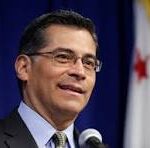
Now that California’s non-partisan primary is over, a quick look at the state’s politics would make you think it is normal, or, at least, similar to the rest of the country. All but one of the state-wide races (and that one is insurance commissioner) has a Democrat running against a Republican. Almost all of the Congressional races has a Democrat running against a Republican. For the moment, the non-partisan primary system appears to be working as it is supposed to work – creating winners out of the more moderate candidate.
More moderate in California is not necessarily moderate in the rest of the country. The Republican nominee for Governor, Steve Hilton, is more moderate than the Republican who ran fourth in the primary. Steve Hilton did not even suggest what Sheriff Chad Bianco actually did – seize 650,000 ballots from a 2025 special election with not much authorization and no clear purpose.
Xavier Becerra, Attorney General, former Secretary of HHS under Joe Biden, and 12 term Congressman is generally seen as a progressive politician with a moderate temperament. The third place candidate in this top two race, billionaire Democrat Tom Steyer, has the billionaire’s malady. He seemed to think he could do anything he wanted to do.
Xavier Becerra, running for Governor, as he was as Attorney General, is right at home in Sacramento, California’s capital. He grew up in that city, the son of Mexican immigrants. An excellent student, it was not shocking that he graduated from Sacramento’s McClatchey High School to be the first in his family to go to college.
But Stanford? That involved some luck. Xavier Becerra had been invited to attend a summer program at the University of California, Davis for promising students of color. An acquaintance in the program had apparently failed an exam and decided applying to Stanford was futile. He was about to throw his untouched application in the trash when Xavier Becerra asked for it and then applied. And was admitted. He doesn’t say and the usual sources don’t say, but he must have been smart enough to apply for financial aid. He was not going to Stanford without it.
At Stanford, he lived in Casa Zapata. Consider how important affinity group housing is in making a place like Stanford welcoming to students for whom the university was foreign territory. Gradually, Xavier Becerra developed some short-term goals for himself. He sometimes contrasts his haphazard career development with Bill Clinton’s purposeful and clear ambition and direction.
At Stanford Xavier Becerra worked, earning money while providing a public service. His tutoring low-income kids was part of a university project and was a factor in moving him from being an economics major planning to find ways to make money to thoughts about advocating for kids like those he was tutoring. He was helped along toward deciding on law school when he attempted unsuccessfully to recover money for his father who had been swindled. His girlfriend may have been a factor. Carolina Reyes, who also lived in Casa Zapata, was going to be a doctor.
Xavier Becerra graduated from Stanford in 1980, took a gap year, and then graduated from Stanford’s law school in 1984. He followed his girlfriend, who was attending Harvard Medical School and got a job in Worcester, west of Cambridge. In that city of fewer than 170,000 people, he worked for the Legal Assistance Corporation and represented clients with mental difficulties. When he returned to California, he had hopes for the Attorney General’s office, but instead went to work for a fellow he had met during his gap year – State Senator Art Torres. Initially, he worked on policy issues in the Sacramento office. Then Torres put this Stanford grad in charge of the Los Angeles district office.
In 1987, Xavier Becerra left the legislature to become Deputy Attorney General to John K Van de Kamp, also a Stanford Law Graduate but from decades earlier. Van de Kamp had been the Los Angeles District Attorney while Xavier Becerra was running Art Torres’s District Office. Xavier Becerra served in the Attorney General’s office for three years during which time he finally married Carolina Reyes who had returned to California and was teaching at the University of California, Davis.
With Van de Kamp’s term of office coming to an end, Xavier Becerra was approached to run for an open state assembly seat. He and Carolina agreed. After he ran and won, he saw a future for himself in elected office. Redistricting created a new 60% Latino Congressional District in north central Los Angeles including neighborhoods like Lincoln Heights and El Sereno. He served just the one term in the state legislature and ran for Congress.
Xavier Becerra was not the only politician interested in California’s new 30th Congressional District. In the Democratic Primary (This is long before California introduced its non-partisan primary, top two run-off system) second place went to Leticia Quezada, third to Albert Lum, fourth to Jeff Penichet. Xavier Becerra won the primary with less than 40% of the vote, but won the general election defeating the Republican candidate by roughly 60 to 25 percent of the vote.
Xavier Becerra thrived in Congress. He became part of the House leadership.–assistant to the Speaker, vice chair and then chair of the Democratic Caucus, and a member of the Ways and Means Committee. In 2016, then Attorney General Kamala Harris was elected to the US Senate. Governor Jerry Brown appointed Xavier Becerra as her replacement. He was elected to a full term in that role in 2018.
Xavier Becerra was California’s Attorney General when Joe Biden nominated him for Secretary of Health and Human Services. Human services organizations examined his record to see if he was sufficiently focused and sufficiently progressive for their taste.
Xavier Becerra was proud to have been a thorn in Trump’s side, an obstacle to the dismantling of the public services Democrats had created over the years. The human services agencies noted his law suits. ANCOR wrote that Xavier Becerra, as California’s Attorney General, had been “in the forefront of legal efforts on health care, leading 20 states and the District of Columbia in a campaign to protect the Affordable Care Act from being dismantled by his Republican counterparts. He has also been vocal in the Democratic Party fighting for women’s health.”
In summing up his career, the New York Times wrote, in addition to the more than 100 law suits against Trump that he led, he was a crucial figure in the drafting of the Affordable Care Act and whipping the votes needed for its passage in the House. The Times also noted that he was criticized for his lack of leadership during the pandemic – criticisms that, are probably unfair. The delay in his confirmation at Secretary of Health and Human Services reified the Biden decision to run the fight against Covid from the White House rather than through a Cabinet office. Xavier Becerra was a good soldier in the battle against the pandemic, but he was not given the opportunity to be a general.
In some ways, the more important criticism of Xavier Becerra comes from Steve Chavez and others like him. Chavez criticizes the extent to which Xavier Becerra has relied on corporate funds for his campaigns. Chavez argues that such reliance always served as a brake on Xavier Becerra’s progressive efforts. For instance, Chavez suggests that, notwithstanding Xavier Becerra’s breakthrough in creating, as Attorney General, a Bureau of Environmental Justice, he would never allow actions that would destroy the energy industries. An alternative argument is that change is most lasting when it occurs through existing institutions. I don’t know that Xavier Becerra would make that argument, but I would. It is not just temperament that leads Xavier Becerra to work with existing institutions.
Xavier Becerra will be facing Republican Steve Hilton, the second-place finisher in the top two non-partisan primary. Steve Hilton was born in London. His parents sought asylum in the United Kingdom in the 1950s after the Hungarian Revolution against the Soviet Union. His father, Istvan Hircsak, (Their family name was Anglicized to Hilton) was a goalie for the Hungarian national ice hockey team. In London, both Hiltons did menial work at Heathrow. After his parents divorced, Steve Hilton and his mother lived in genuine hardship. But Hilton was an excellent student. He was awarded a scholarship to Christ’s Hospital School after which he earned a BA at New College, Oxford.
After graduation, Steve Hilton went to work for the British Conservative Party. He developed a friendship with eventual Prime Minister David Cameron and became the Party’s connection to their advertisers. Working for the Conservatives, he met his wife, Rachel Whetstone, a leading figure in communications for the Conservatives.
As Prime Minister beginning in 2008, Cameron had introduced austerity measures, reorganized health services transferring 60 billion pounds away from the national health to local services. Cameron made changes in welfare, one example of which was a reduction in housing benefits to those considered to be living in too large a space.
In 2010, Steve Hilton became Prime Minister Cameron’s Director of Strategy. During the two years Hilton was in that role, Cameron privatized the Royal Mail, passed the Equality Act which, among other things, prohibited employment discrimination based on race or sexual orientation, and oversaw a failed referendum on an alternative to the first past the post elections that characterized British politics. That failure was in the interest of Cameron’s Conservatives. The coalition member Liberals had agreed to attempt the referendum as a route to their goal of proportional representation which would have solved the Liberal problem of consistently obtaining a large number of votes, but not many actual Members of Parliament. After two years at that high level of government, Steve Hilton left for Stanford University in 2012 to take what would be an American sabbatical.
Steve Hilton had made his way as an opponent of big government. His last memo to David Cameron was a proposal to sharply reduce the number of civil servants in the British government. After Stanford, Hilton became part of a Silicon Valley start-up for a couple of years. When he returned to the UK, he joined a research institute and wrote a book the subtitle of which was Designing a World Where People Come First. He continued as a peripatetic scholar, mostly in California. He proposed a solution to the state’s housing shortage with a referendum that would prohibit private law suits based on the California Environmental Quality Act.
In 2016, while working for Fox News, Hilton endorsed Donald Trump for president. His weekly show on Fox, The Next Revolution, lasted until 2023. During the Covid Pandemic, not long after he had become a US citizen, he used the show to urge the end of lockdown measures and mandates for social distances. This cure, he claimed, was worse than the disease.
Steve Hilton claimed that Anthony Fauci, using his national health role, had commissioned work at China’s Wuhan Institute that was the source of the Covid Virus. After Trump was defeated in the 2020 election, Hilton demanded investigations into what he claimed were election frauds that led to the defeat. Even now, at the May 5 debate among California candidates for governor, Steve Hilton avoided the issue of who won the 2020 election, choosing to push on to other issues rather than answer a direct question about the election that Trump continues to claim Joe Biden won as a result of fraud.
Rachel Whetstone, Steve Hilton’s wife, has gone on to lead communications for Google, serve as vice president of policy and communications for Uber, and is now working as the chief communications officer for Netflix. Large corporations all notwithstanding their belief in small entities.
If the second-place finisher had been Tom Steyer, we would have been looking forward to a hugely expensive contest between two Democrats for governor. Instead, we have a serious race. Xavier Becerra, a man with a moderate temperament and progressive politics against Steve Hilton, a man with radically conservative politics which ought to be a contradiction in terms. DONATE to Xavier Becerra’s campaign. He is the favorite now, but we cannot and he cannot be complacent.
Help California be part of flipping the House. The first three districts listed below are identified by Cook as Solid Democratic. Even so, they lack resources.
California 01 is a Cook Solid Democrat, but is also a flip from R to D. Redistricting has made this district a D+11. In the primary, Republican Assemblyman James Gallagher led Democrat Mike McGuire, President Pro Tem of the State Senate 44 to 40.2. As of May 13, each of them had spent a substantial portion of their resources leaving Mike McGuire with $200,000 and Gallagher with $500,000. This District leans Democratic now, but this race is not an automatic win. Mike McGuire grew up on his family farm. He is a Moderate Democrat whose first three priorities are ensuring health care for all Americans, fixing our tax system so that the wealthy pay their share, and holding ICE accountable so that it does not terrorize us all. DONATE to Mike McGuire’s campaign.
California 06 is a Cook Solid Democrat, but is also a flip from R to D. Redistricting has made this district a D+14. Don’t count on that. In the primary, independent Kevin Kiley (the incumbent of CA 03 continued to caucus with the Republicans) led State Senator Richard Pan by a 24.3 to 23.2 margin. Kiley is a smart guy and a an anti-government ideologue. On May 13, he had $2 million in cash available to Richard Pan’s $100,000. Dr. Richard Pan is the child of Taiwanese immigrants. He was head of the medical residency programs at the University of California, Davis. In the state legislature, after a measles outbreak, he led an effort to eliminate almost all bases for rejecting mandatory vaccinations. In addition to the issue of gaining a majority in Congress, Richard Pan would be an asset in Congress. His first two priorities are ensuring the availability of high-quality health care for everyone and fighting the President Donald Trump and HHS Secretary RFK Jr’s priorities. DONATE to Dr. Richard Pan’s campaign.
California 41 is a Cook Solid Democrat, bit it was a seat previously held by a Republican. Two Republicans are competing for CA 40, but in this D+9 district Linda Sanchez has moved over from CA 38. She led Republican plumbing contractor Mitch Clemmons by a narrow 37.5 to 35.8 margin. However, the other candidates were Democrats and Clemmons has raised no money. Linda Sanchez had $650,000 on May 13 which, under some circumstances, might seem like not a lot. There may be a temptation to be complacent, but that is always dangerous. DONATE.
California 48 is a Cook Lean D and would be a flip from R to D. The incumbent Republican is not running. Democratic City councilor Marni Von Wilpert trailed Republican County Supervisor Jim Desmond 20.9 to 39.3 in this district. There were a slew of Democrats running for this Democratic leaning seat and only one other Republican whose 6.9% would not have put the Republicans past 50%. Marni Von Wilpert trailed Jim Desmond financially on May 13 as well — $300,000 to $1.1 million. She can win this election, but not without resources. DONATE to Marni Von Wilpert’s campaign.
California 22 is a Toss up according to Cook. A Democratic win would be a flip from R to D. School Board Trustee Randy Villegas, endorsed by Bernie Sanders, trailed Valadao’s 40.7% 32.2. The Democrats third place finisher had 27.2%.
Even with the combined Democratic vote well over 50% in the primary, Valadao’s financial lead is daunting. On May 13, Valadao had $2.9 million to Randy Villegas’s $300,000. DONATE to Randy Villegas’s campaign.
Democrats will gain their target of flipping five Republican seats if they can win all of the above races.